If you have ever stood at the edge of an ancient, dense forest just as the morning mist begins to lift, you understand a quiet kind of awe. The canopy overhead is thick and layered, shadows stretch across the damp earth, and you can hear the faint, constant rustle of unseen wildlife moving through the underbrush. To someone who has spent their entire life indoors, that forest can feel entirely overwhelming, unpredictable, and full of hidden hazards.
The modern stock market often feels precisely the same way. When you open a brokerage account or tune into financial news channels, you are hit with a barrage of blinking red and green numbers, jargon-heavy terminology, complex algorithmic charts, and frantic commentary about inflation, interest rates, and geopolitical shifts. It is completely normal to feel a deep sense of hesitation, wondering if you are walking blindfolded into a territory where you might lose your footing.Stepping into the stock market for the first time can feel a lot like walking into an ancient, dense forest at dawn. The canopy is thick, shadows stretch across the ground, and you hear the rustle of unseen wildlife—representing the constant, invisible hum of global trades, fluctuating tickers, and economic data. It is easy to feel overwhelmed by the sheer scale of it all.
Yet, just as a seasoned naturalist learns to read the patterns of the woods—the rings of a fallen tree, the flow of a hidden stream, the seasonal migration of birds—you too can learn to read the fundamental rhythms of the market. Building investing knowledge isn’t about rushing blindly into the wilderness; it is about planting deep roots, growing slowly, and cultivating patience.
What Exactly is the Stock Market? (Rooted in Reality)

At its core, think of the stock market as a vast, digital ecosystem. Much like an ecosystem thrives on balance and mutual survival, the market is a grand marketplace where small pieces of living, breathing businesses—known as shares or stocks—are bought and sold.
When you buy a share of a company, you aren’t just holding a digital ticket or a speculative token. You are purchasing a literal twig of ownership in that business. If the company branches out, innovates, and bears sweet fruit (profits), your investment grows. If the business suffers a blight, your investment contracts.
Public Companies: These are enterprises that have opened their doors to the public, allowing anyone to buy a piece of their corporate harvest through an exchange.
The Exchange: Think of this as the forest clearing where buyers and sellers meet. Major exchanges like the New York Stock Exchange (NYSE) or digital-first modern platforms act as the clearinghouse for this natural exchange of value.
Navigating the Market Climate: Trends and Tides
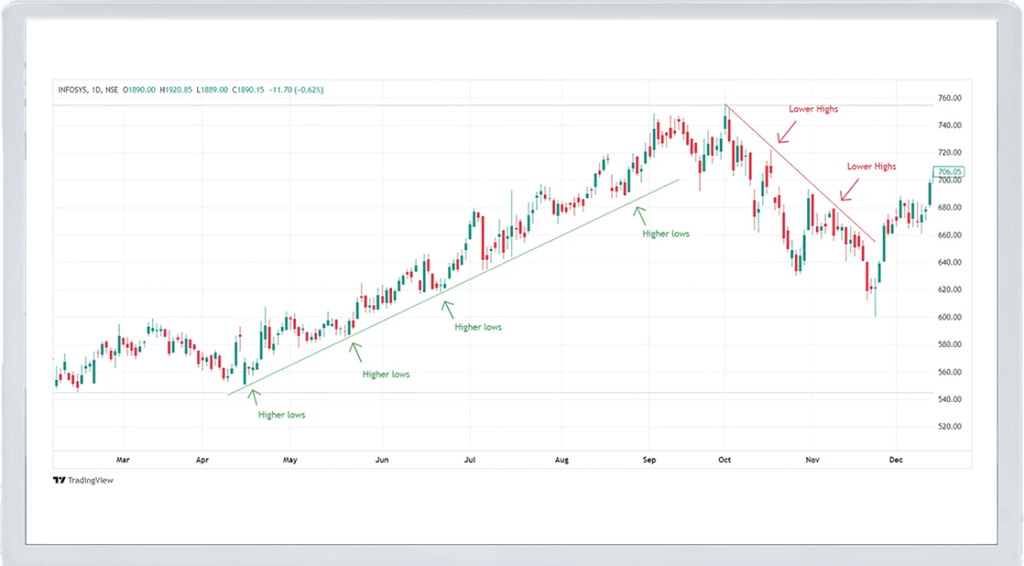
Just as weather patterns shift from the scorching heat of summer to the freezing gales of winter, the stock market experiences its own distinct seasons. To survive and thrive, an investor must learn to read these cycles rather than panic when the wind blows hard.
Riding the Technological Canopy
In today’s landscape, technological evolution—particularly artificial intelligence infrastructure, green energy transitions, and cloud architecture—acts like rich topsoil driving massive corporate growth. Much like a forest stretching upward toward the sunlight, innovative sectors capture the imagination and capital of millions. However, seasoned gardeners know that rapid, unbridled growth can sometimes lead to dry brush. Blindly chasing every high-flying leaf can lead to burnouts if you don’t look closely at a company’s underlying trunk—its fundamental earnings and cash flow.
Weathering Market Volatility
Volatility is nothing more than a sudden storm. Prices drop, dark clouds of geopolitical uncertainty or inflation roll in, and retail investors panic, pulling up their newly planted seeds by the roots to check if they are still growing. Human psychology often pushes us to flee at the first rumble of thunder. But true wealth creation belongs to those who anchor themselves deep, recognizing that storms are a natural part of any economic climate.
Core Strategies for Cultivating a Healthy Portfolio

If you want your financial garden to flourish over decades, you cannot throw seeds haphazardly onto concrete and hope for rain. You need a structured, deliberate cultivation plan.
Diversification: Planting a Mixed Forest
Monocultures—forests made up of only a single tree species—are notoriously fragile. If a specific pest or disease hits, the entire forest collapses. The same rule applies to your money.
Spread Your Seeds: Instead of putting all your capital into a single tech startup or one local business, spread your investments across different sectors (like healthcare, industrials, renewable energy, and consumer goods).
Geographic Balance: Look both locally and globally to ensure that if one region experiences an economic drought, another region’s rainfall can sustain your overall portfolio.
Dollar-Cost Averaging (DCA): The Steady Stream of Consistency
Trying to time the market—waiting for the absolute lowest “bottom” or the highest “peak”—is like trying to predict the exact second a raindrop will fall from the sky. Instead, use Dollar-Cost Averaging.
By investing a fixed amount of money at regular intervals (say, the first of every month), you naturally buy fewer shares when prices are high (expensive fruit) and more shares when prices dip (discounted fruit).
Over time, this smooths out the rough edges of market volatility without requiring emotional, stressful guesswork.
Passive Investing: Letting Nature Take Its Course
For many beginners, picking individual stocks is like foraging for wild mushrooms without knowing which ones are edible—it can be dangerous. Instead, many turn to index funds and Exchange-Traded Funds (ETFs).
These are pre-bundled baskets containing hundreds or even thousands of different stocks (such as the S&P 500).
By purchasing a single ETF, you instantly own a tiny sliver of an entire corporate forest, ensuring that you grow alongside the broad economy rather than betting your future on a single sapling.
The Human Element: Taming Your Inner Wilderness

The hardest part of investing isn’t mathematics or economics; it is psychology. Human brains are wired for immediate survival. When we see our portfolio value drop during a market correction, our primitive fight-or-flight response screams at us to sell everything and hide our cash under a mattress.
Acknowledge Fear and Greed: Greed tells you to buy a stock simply because it is shooting straight up like a bamboo stalk. Fear tells you to dump your assets at a massive loss during a temporary market pullback.
Build Emotional Resilience: Write down your investment thesis before you buy any asset. Why are you planting this seed? What is your time horizon? When the market winds howl, look back at your initial plan rather than reacting to the daily noise of financial media headlines.
FAQ’s
1. What are stock market basics?
Stock market basics include understanding stocks, exchanges, prices, orders, market movements, and investment risks.
2. How can beginners learn about the stock market?
Beginners can start by learning key investment terms, understanding how markets work, studying company information, and practicing research before investing.
3. What is a stock?
A stock represents an ownership interest in a company, although the specific rights can vary by share class.
4. How does the stock market work?
The stock market provides a marketplace where buyers and sellers trade shares, with prices changing based on supply, demand, and other market factors.
5. Is stock market investing risky?
Yes. Stock prices can rise or fall, and investors can lose some or all of the money they invest.


0 Comments