Have you ever sat quietly by a rain-streaked window, watching droplets race down the glass, and wondered what it truly sounds like to whisper your deepest thoughts in an entirely different tongue? Maybe you have stared at a flashing cursor on a language app late at night, feeling that familiar, heavy wave of digital fatigue. Swiping through endless screens, tapping sterile virtual tiles, and listening to robotic, lifeless audio clips can start to feel less like human connection and more like a monotonous video game designed to test your patience rather than feed your soul.
We live in a modern era completely obsessed with instant gratification, productivity hacks, and algorithms promising miraculous fluency in just five minutes a day. Yet, the human mind does not learn language like a server downloading data files. We learn through organic rhythm, emotional resonance, trial, error, and deep sensory immersion—much like a wild seed taking root in rich, dark soil, slowly sprouting upward toward the sunlight over weeks and months of quiet perseverance.
If you are craving something grounded, tactile, deeply authentic, and completely unhurried for your language journey this year, let us step away from the harsh blue-light glow of our smartphones. Let us open the crisp, unblemished pages of a real, physical book. Here is a heartfelt, deeply human guide featuring of the best books for learning a new language in 2026, carefully handpicked to help you think, feel, struggle, and ultimately blossom in your chosen tongue.
Fluent Forever by Gabriel Wyner
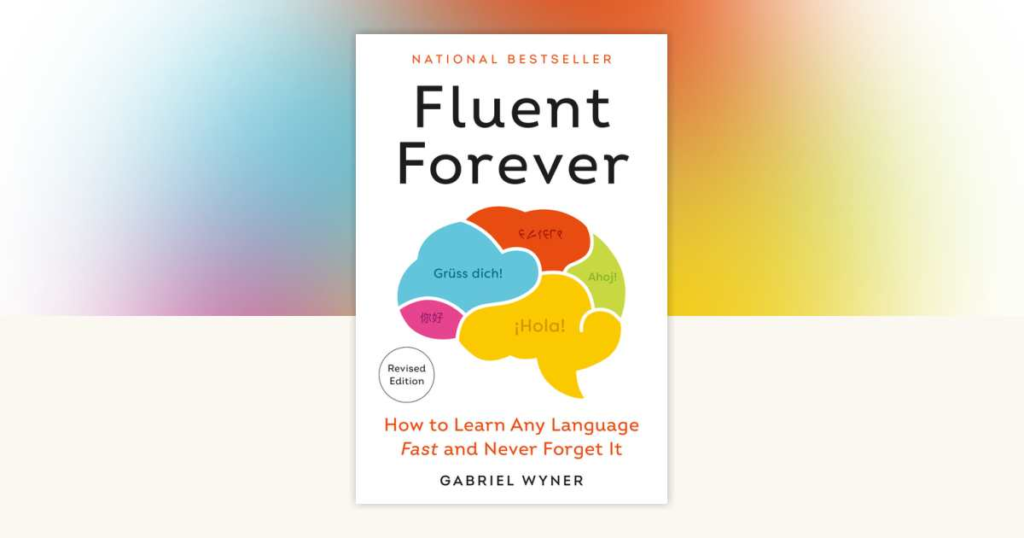
The Philosophy: Rewiring Your Mental Landscape for Lasting Memory Think of your memory like a vast, untamed forest. If you carve a path through the brush just once, the weeds and vines quickly grow back and swallow it whole. But if you walk that same trail every single day, it turns into a clear, enduring pathway. Gabriel Wyner’s Fluent Forever understands this deep human truth at its core.
Instead of mindlessly cramming dry vocabulary lists that evaporate from your mind by Friday evening, this book teaches you how to construct your own personal flashcards using evocative images and native sounds. It shifts your psychology away from translation and toward direct association. You train your brain to connect words directly to concepts—just like a child learning to name the sky, the river, or the wind without translating it backward into a native tongue first. It is patient, structural, and profoundly rewarding.
The Language Instinct by Steven Pinker
The Insight: Understanding the Wild Roots of Human Speech Before you dive headfirst into conjugating complex verbs or memorizing grocery lists in Spanish, French, Japanese, or German, take a moment to understand what language actually is. Steven Pinker’s timeless work reminds us that human speech is not an artificial, man-made invention like algebra; it is a natural biological faculty, as inherently organic to us as web-spinning is to a spider or migration is to a flock of geese.
Reading this book fundamentally changes your inner narrative. It lifts the heavy intimidation factor off grammar and syntax. You begin to realize that your brain is already hardwired to absorb language effortlessly, provided you step out of your own way and give it the right environment, patience, and natural exposure.
Fluent in 3 Months by Benny Lewis
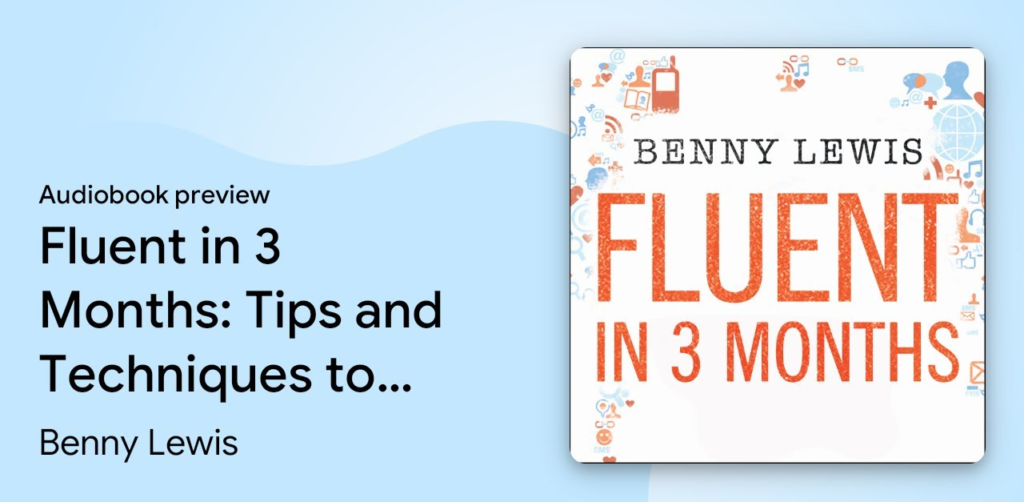
The Courage: Embracing Messy Imperfection and Speaking Out Loud One of the biggest, most paralyzing mental blocks in language learning isn’t a lack of intelligence or a bad memory—it is pure, unadulterated fear. We are terrified of sounding foolish, of twisting our tongues around unfamiliar consonants, or of making a clumsy grammatical mistake in front of a native speaker who looks at us blankly.
Benny Lewis gleefully tears down that towering wall of perfectionism. This book reads like a warm, late-night pep talk from an adventurous, well-traveled friend who encourages you to stumble, stutter, blush, and laugh at your own linguistic blunders. It reframes mistakes not as failures, but as essential, breathing stepping stones on the path to true fluency. After all, a tree must bend violently in the spring wind before it stands strong; you must allow yourself to wobble when you speak.
Bilingual Short Stories Series (Curated by Language-Specific Publishers)
The Immersion: Finding Sanctuary in Simple Narratives There is a profound, quiet comfort in reading a good story. When we were children, we didn’t learn our first words from dense dictionary definitions or boring structural charts; we learned them from bedtime stories read softly under the warm glow of a bedside lamp.
Modern graded readers and bilingual short story collections (widely available for Spanish, French, Italian, German, Mandarin, and beyond) bring that cozy, nostalgic magic back to adult learning. By placing your native language on one page and your target language directly on the opposite page, these books act like stepping stones across a rushing, unpredictable creek. You can leap back and forth safely, letting the unfolding plot pull you forward while your vocabulary grows naturally in the background like wildflowers in a meadow.
Through the Language Glass by Guy Deutscher
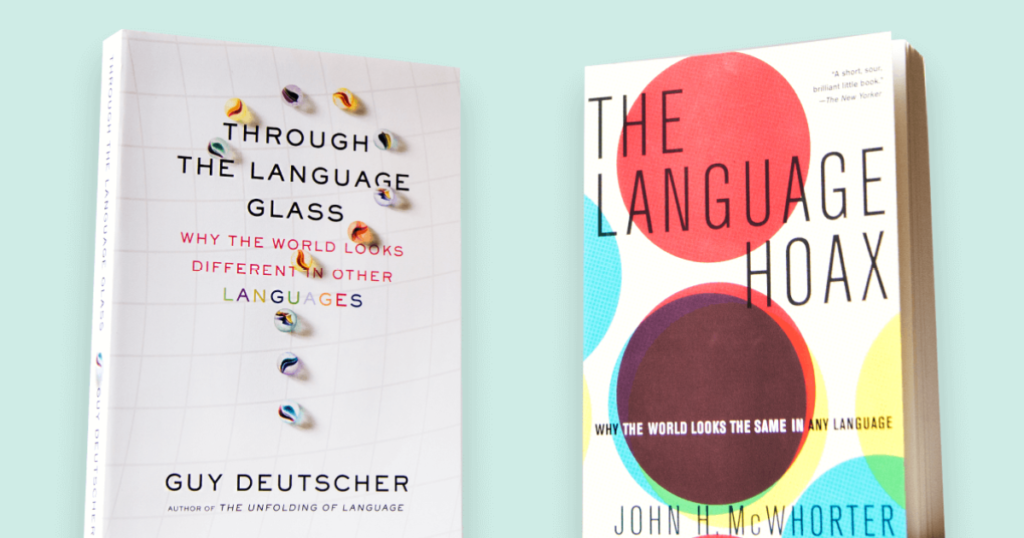
The Wonder: How Words Paint Our Perception of Reality Have you ever wondered if speakers of different languages actually see the world around them differently? Guy Deutscher takes you on a fascinating, eye-opening journey through cultural linguistics, exploring how our mother tongue shapes our thoughts, colors our horizons, and frames our lived experiences.
While this is not a textbook filled with homework exercises or vocabulary quizzes, it is a spiritual awakening for anyone learning a new language. It reminds you that every single time you pick up a new word, idiom, or grammatical nuance, you are essentially adopting a brand-new lens through which to look at autumn sunsets, roaring oceans, human relationships, and the passage of time itself.
Pimsleur Conversational Courses (Companion Reading Guides)
The Rhythm: Tuning Your Ear to the Music of Speech Long before books were printed, human language lived exclusively in the air—in the cadence of a mother’s lullaby, the shout of a hunter across a valley, and the murmurs around a communal fire. Dr. Paul Pimsleur understood that hearing and rhythm come before ink on paper.
While Pimsleur is primarily an audio-based methodology, their companion reading guides and structural textbooks bridge the gap between sound and sight. Working through these materials teaches you to listen to the natural rise and fall of a foreign tongue. You learn to stop translating words in your head and start responding instinctively, letting the rhythm of the language flow through your nervous system like a song you cannot get out of your head.
Madrigal’s Magic Key to Spanish (or Similar Classic Guides)
The Breakthrough: Unlocking Cognates and Structural Logic Have you ever stared at a foreign phrase and felt like you were looking at an unbreakable code? Margarita Madrigal’s classic guide shatters that illusion with gentle, brilliant simplicity. Instead of forcing you to memorize endless lists of unrelated words, this book teaches you how languages share deep, historical roots.
You discover thousands of words you already know because they share Latin or Germanic roots with English. It feels like walking through a familiar forest and suddenly recognizing the distinct shape of an oak leaf you’ve known since childhood. It builds instant confidence, proving to your hesitant mind that you are far closer to fluency than you ever dared to imagine.
Conversational Russian / French / Japanese in 7 Days (Targeted Phrase & Culture Books)

The Connection: Grounding Language in Daily Survival Sometimes, you don’t need an academic deep-dive into medieval grammar rules; you just need to know how to order a warm cup of coffee in a bustling Parisian café, ask for directions when you are lost on a rainy Tokyo street corner, or greet a market vendor with a polite smile in Rome.
Targeted cultural phrasebooks that focus heavily on real-world human interaction ground your learning in reality. They remind you that language is ultimately an act of hospitality and bridge-building. Every phrase you learn is an open door, inviting another human being to share their world with you.
The Polyglot’s Manual (Classic Comparative Phrasebooks)
The Detective Work: Finding Patterns in the Chaos For the deeply curious mind—the kind of person who loves turning over rocks to see what living creatures scurry underneath—comparative phrasebooks are an absolute joy. These books lay out identical sentences across multiple languages side-by-side, allowing your brain to play linguistic detective.
You begin to notice hidden patterns: how one language uses a reflexive verb where another uses a passive construction, or how different cultures describe the same emotional state using metaphors drawn from nature, water, fire, or the seasons. It turns studying into an intellectual playground, satisfying your innate human desire to solve puzzles and discover underlying order.
An Intimate Journal / Blank Notebook (Your Personal Language Sanctuary)

The Creation: Writing Your Own Living Textbook The absolute best book for learning a new language in 2026 is one that does not even exist yet: a completely blank, beautifully bound journal with thick paper that welcomes the scratch of a fountain pen.
Textbooks can guide you, apps can prod you, and teachers can correct you, but true ownership of a language happens when you start writing your own story in it. Dedicate a quiet notebook entirely to your target language. Paste in ticket stubs from local cafes, write messy diary entries about your day, sketch random objects and label them in your new tongue, and let your thoughts spill onto the paper without censorship.
FAQ’s
1. What are the best books for learning a new language?
Books that combine vocabulary, grammar, reading exercises, and practical conversations can provide a useful foundation.
2. Are language learning books good for beginners?
Yes, beginner-friendly books can help learners build basic vocabulary, grammar, and everyday communication skills.
3. Can books improve English vocabulary?
Yes, reading regularly and using vocabulary-focused books can help expand your English vocabulary.
4. How can I use a language learning book effectively?
Study consistently, write down new words, practice exercises, and use new vocabulary in your own sentences.
5. How long does it take to learn a language with books?
The time varies depending on the language, your starting level, study routine, and how much you practice outside the book.


0 Comments